Industrial coatings · Field guide
Warehouse Floor Coating: Repair or Recoat?
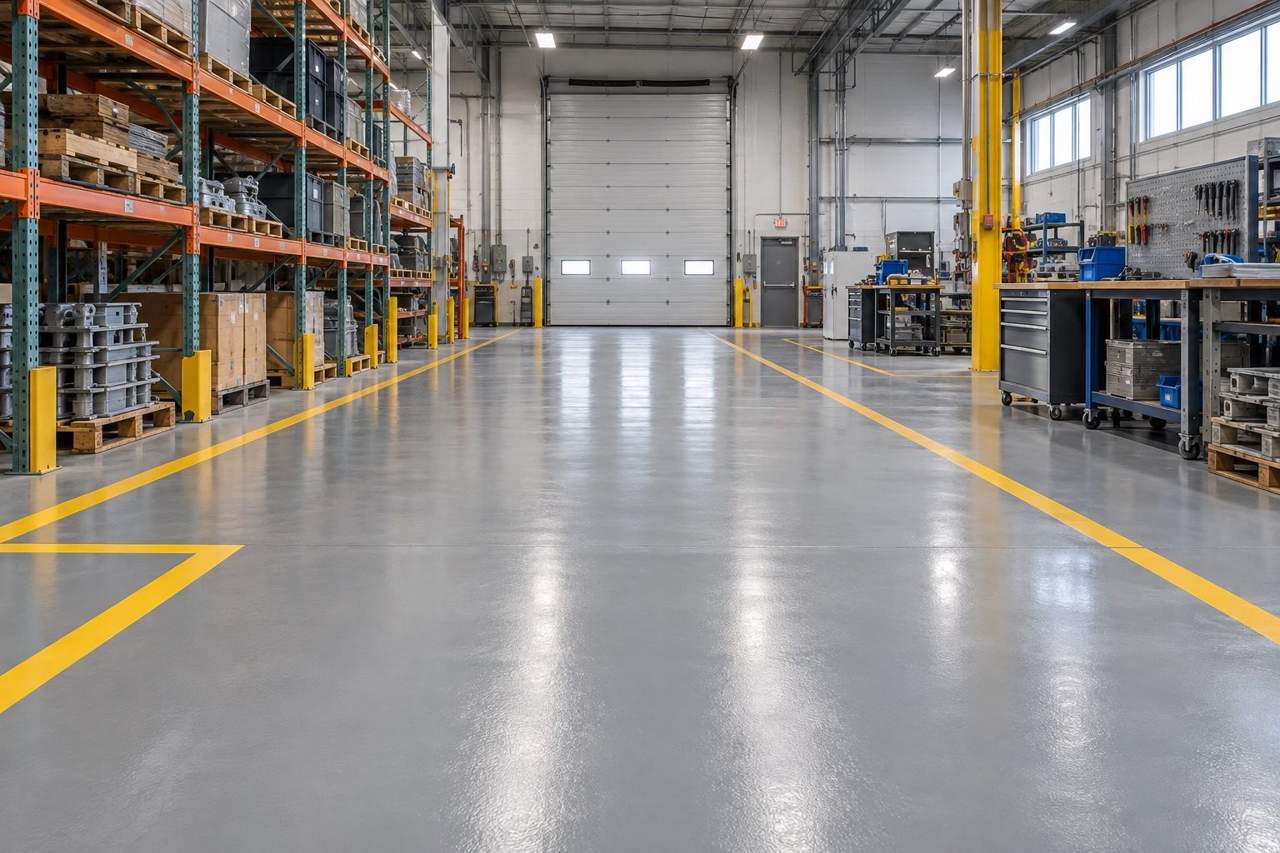
How to distinguish isolated coating damage from a system-wide preparation or exposure problem.
Start with evidence
Record the existing substrate, exposure, damage, access and previous work. Photographs are useful when they are labelled as actual projects or clearly identified as representative.
Define performance and constraints
Identify the required outcome, operating hours, adjacent finishes, ventilation, cure or drying time and documentation obligations before selecting a product.
Request a written scope
The proposal should identify preparation, repairs, materials, application limits, exclusions, protection and the party responsible for inspections or testing.
Verify before closeout
Review appearance, coverage, transitions and required records. Keep product and maintenance information with the property file.
Map damage against warehouse use
Locate worn lanes, turning points, loading areas and isolated defects on a plan. Record cleaning and exposure conditions and the history of earlier repairs. Ask the contractor to investigate whether the problem is local or linked to broader substrate or system conditions before choosing a repair boundary.
Plan operations around the proposed work
Compare access restrictions, stock movement, preparation and return-to-service requirements for repair and full recoating options. Identify interfaces between new and retained work. Agree the acceptance and maintenance record so the warehouse team understands where the system changed and what restrictions remain.
Sources and editorial note
Published by Industry Army Marketing (IAM). Updated September 28, 2026. This is an independent project-planning article, not an installation specification. Confirm product and assembly requirements using current manufacturer documents and the responsible project professionals.